

Introduction
The tahini It is one of the most authentic and valuable fruits of the Greek dietary tradition.
What is tahini?
The tahini It is a paste of 100% ground sesame seeds, either raw or roasted.
Depending on the production method and the type of sesame, different textures and flavors result.
Types of tahini
- White tahini: has a mild flavor and light color, ideal for sweet recipes.
- Whole wheat tahini: made from sesame seeds with husks, has a darker color and a stronger flavor.
- Organic tahini: from certified organic sesame crops, without additives.
- Tahini with cocoa or honey: ideal for spreading at breakfast or as a dessert.
Its traditional production is still carried out in stone mill, where the seeds are slowly ground to preserve their natural oils and all the ingredients.
This method is a trademark for quality, Greek tahini with full aroma and texture.
History and culture of tahini
The tahini has deep roots in the East and the Mediterranean.
Nutritional value
The tahini It is a true nutritional powerhouse.
Nutrients
Per 100 grams, the tahini contains:
- Plant-based protein (~20%)
- Calcium, magnesium, potassium, zinc
- Fibre
- Good fat (polyunsaturated fat)
How to use tahini in the kitchen
The tahini it's incredibly versatile — it can be used in sweet and savory creations.
Tahini for breakfast
- Tahini with honey: the ultimate Greek super-duo.
- Cereal bars with tahini and oats.
- Yogurt with tahini and cinnamon – simple, enjoyment.
In cooking
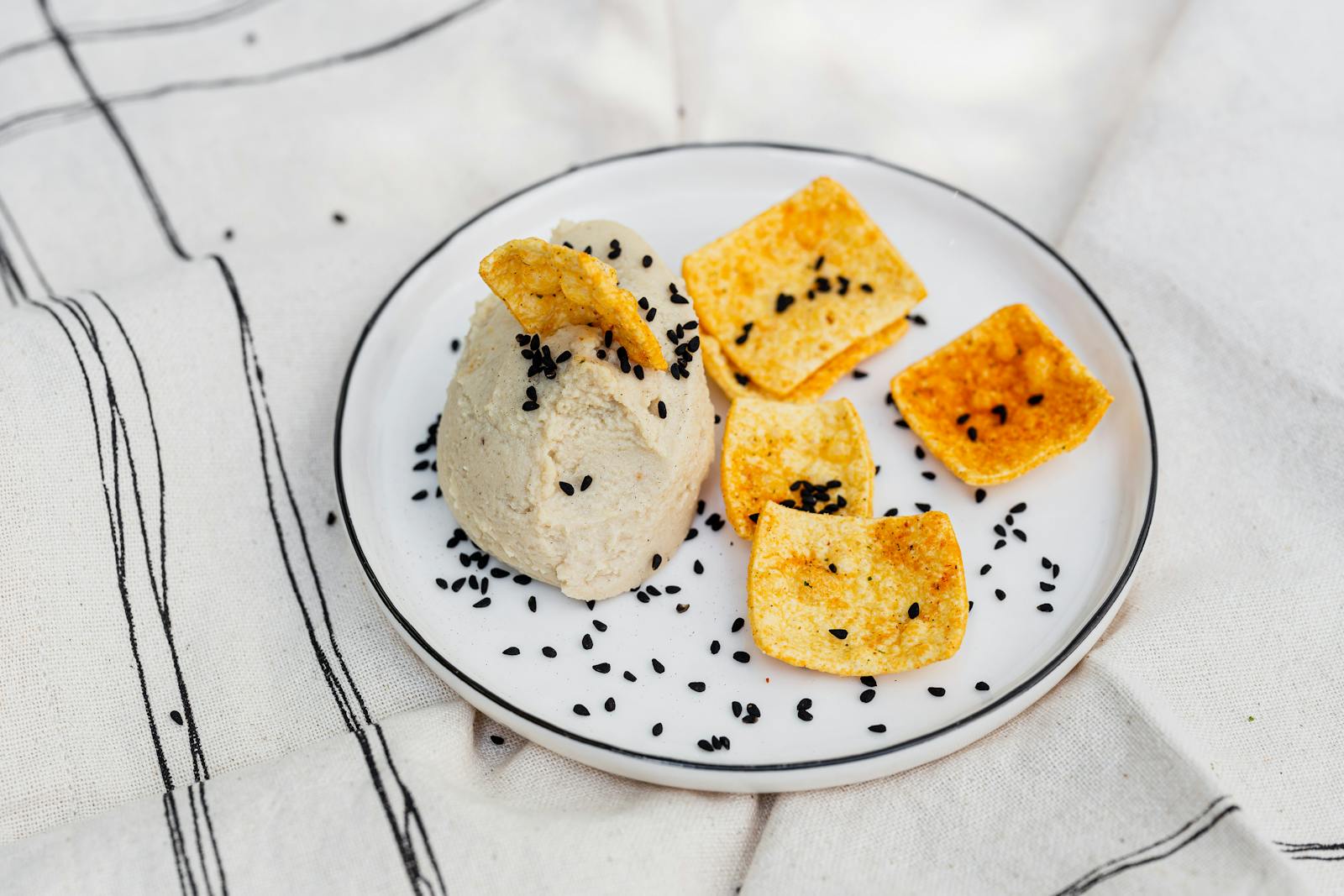
- Hummus: chickpeas with tahini, olive oil and lemon – the most famous vegan recipe.
- Lentils with tahini: alternative version of the classic soup.
- Salads with tahini, lemon and garlic dressing.
- Oily or fasting foods – tahini is a perfect substitute for oil or egg and lemon sauce.
In confectionery
- Tahini halva – traditional Greek dessert.
- Cookies and cakes with tahini instead of butter.
- Bars and energy balls with honey, tahini and nuts.
How to choose good tahini
Choosing a quality product makes the difference.
What to watch out for
- Tag: to write 100% sesame, without additives or palm oil.
- Origin: preferred Greek or organic products.
- Texture: it is thick but homogeneous, with natural oil separation (a sign of purity).
Easy and healthy recipes with tahini
- Salad dressing with tahini and lemon – simple, vegan and delicious.
- Chickpeas with tahini in the oven – creamy and rich dish.
- Tahini and orange cookies – aromatic and fasting.
Purchase & storage
The tahini It is a product with a long shelf life, as long as it is stored properly.
- Keep it in your cool, shady place.
- The natural separation of oil is perfectly normal – just mix it up.
- Lasts 12-18 months after opening.
- There are family packages and options for professional use.
Where to buy good tahini in Greece
If you are looking for quality Greek tahini, you can find it at Baclocarpus (Kypselis 92, 11363 Athens) and in its online store with traditional products:
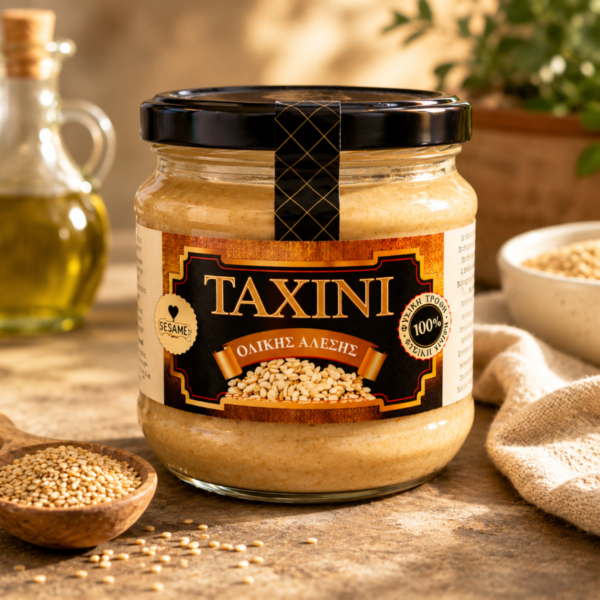
- Whole Grain Tahini – pure, Greek, without additives, with a rich flavor.
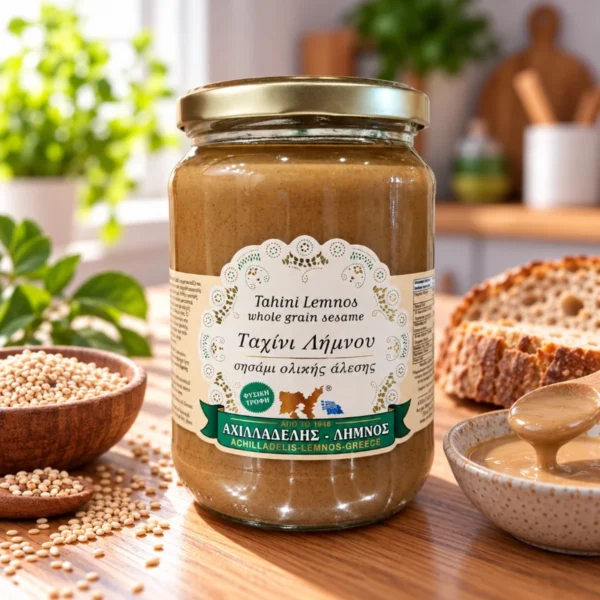
- Whole Grain Tahini from Limnos – Greek production, made from fine sesame and traditional grinding.
Bakalokarpos offers selected products from Greek producers, with respect for tradition and natural nutrition.
Conclusion
The tahini it's more than just a spread — it's a whole nutrition philosophy.
It is an ideal choice for those who want to eat naturally, balanced and Greek.
Whether you enjoy it with honey for breakfast or in savory and sweet recipes, one thing is certain:
This material is a natural treasure that deserves to be in every kitchen.
See all nut butters and spreads that we have.
For homemade hummus and other ideas with tahini, see our chickpea recipes.
Related products
-
 Achiladelis Whole Milled Tahini from Limnos9.30€
-
Whole wheat tahiniPrice range: 4.90€ through 8.50€