More than 60% of European vegetarians use Greek spices to give rich flavor to their dishes. The freshness and intensity of spices depend not only on the quality but also on the way of storage. By learning to organize spices correctly, healthy eating and everyday cooking are transformed with truly authentic flavors.
Contents
- Step 1: Choose the right jars and containers
- Step 2: Prepare storage areas
- Step 3: Sort and travel each spice
- Step 4: Apply proper storage techniques
- Step 5: Check and renew spices regularly
Quick Summary
| Leading | Explanation |
|---|---|
| 1. Choose glass jars | Glass jars with airtight lids protect spices from moisture and odors. |
| 2. Store in cool places | Choose dark areas away from heat sources, such as stoves and ovens. |
| 3. Sort by frequency | Organize spices alphabetically or by cuisine for easier access. |
| 4. Use tightly sealed containers | Prevent oxidation and moisture absorption, preserving the freshness of spices. |
| 5. Check freshness regularly | Check the purchase date and smell to make sure the spices are still in good condition. |
Step 1: Choose the right jars and containers
Choosing the right containers for your spices is crucial to preserving their freshness and aroma. When looking for the ideal storage jars, you should focus on specific features that will protect your spices.
The best containers are those that offer a tight seal and exclude moisture and air. Professionals recommend glass jars with an airtight lid, as they are neutral, durable and do not absorb odors. Prefer dark glass jars that protect spices from light, thus preserving their flavor and aroma for a longer period of time.
When choosing a size, consider the amount of spices you have. Smaller jars are ideal for frequently used spices, while larger ones are ideal for less frequent quantities. Avoid plastic containers, which can absorb odors and reduce the quality of the spices.
Professional advice: Invest in labels and tags to easily organize and distinguish the different spices on your shelves.
See below for a brief comparison of spice container materials and their main advantages or disadvantages:
| Container Material | Advantages | Disadvantages |
|---|---|---|
| Glass | Does not absorb odors, neutral | It can break easily. |
| Metal | Protects from light | It can oxidize. |
| Plastic | Lightweight and economical | Absorbs odors, not durable |
| Ceramic | Interesting design, durable | Usually more expensive |
Step 2: Prepare storage areas
By properly preparing your spice storage areas, you ensure maximum preservation of their flavor and aroma. Choosing the right environment is just as important as choosing the right containers.
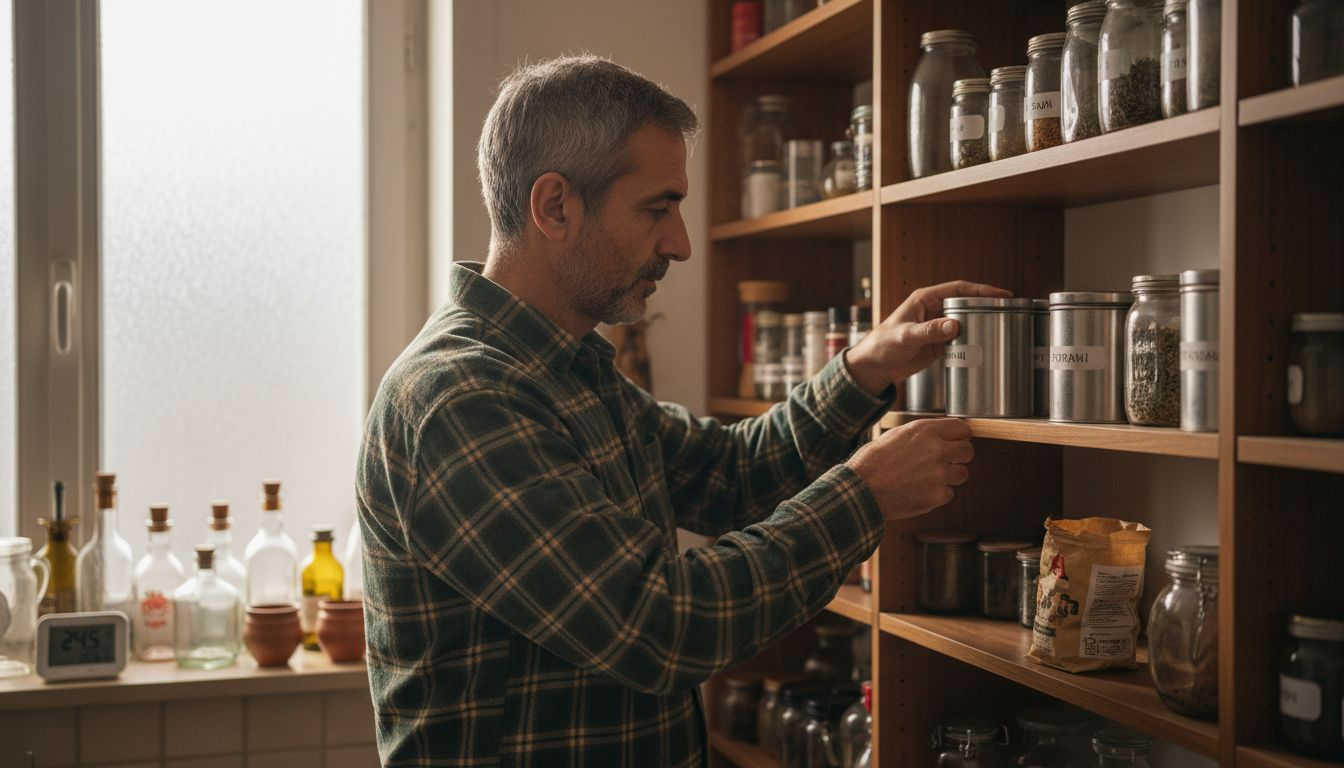
Experts recommend storing spices in cool, dark places., away from heat sources such as stoves and ovens. Choose cabinets or shelves that protect from direct sunlight and keep humidity levels below 60%. Avoid areas near appliances that produce steam or heat, as this can quickly deteriorate the quality of your spices.
To perfectly organize your storage space, consider arranging your spices alphabetically or by frequency of use. Use shelves in closed cabinets that protect against moisture and temperature fluctuations. Make sure the spaces are dry and clean before placing your spices.
Professional advice: Place a small hygrometer in your storage area to monitor humidity levels and protect your spices.
Step 3: Sort and travel each spice
Properly classifying spices is key to maintaining quality and simplifying your everyday cooking. A well-organized spice collection not only makes cooking easier but also extends their shelf life.
Experts recommend classifying spices based on cuisine or frequency of use.. Create groups such as Mediterranean spices, Indian spices, or spices for everyday recipes. Be sure to always note the purchase date on the labels so you can monitor freshness. Choose whole spices when possible and grind them fresh before use for optimal flavor.
To maintain order, choose uniform containers and organize them on clearly labeled shelves. Place the most frequently used spices in accessible places and remove those that have expired. Always use dry tools to avoid moisture buildup.
Professional advice: Invest in rotating shelves or magnetic holders to save space and have easy access to your spices.
Step 4: Apply proper storage techniques
Storing spices properly is a delicate combination of care and knowledge that will keep their aromas and flavors alive and intense. Every detail in the process counts and can make a difference in the quality of your spices.
Experts recommend using airtight containers to prevent oxidation and moisture absorption that degrade volatile oils. Opt for glass jars or metal cans that don't absorb odors and protect from light. Avoid pouring spices directly into hot pots to prevent moisture from entering, and try to use whole spices where possible.
To keep spices in top condition, keep them away from heat sources and direct sunlight. Do not store them near the stove or oven and prefer cool, dark places. Always use dry spoons and make sure to close containers immediately after use to prevent moisture from entering.
Professional advice: Place a small grain of raw rice inside spice jars to absorb excess moisture and keep the spices dry.
Step 5: Check and renew spices regularly
Spices are not eternal and need regular inspection to maintain their freshness and quality. Proper management of your collection will guarantee rich and intense flavors in every recipe.
Professionals recommend checking your spices at regular intervals. to ensure maximum flavor performance. Whole spices typically last 2 to 3 years, while ground spices lose their potency in 6 to 12 months. Check them in two simple synaesthetic ways by rubbing a small amount between your fingers and smelling the aroma. If the smell is faint or non-existent or if the color has faded significantly, it's time to replace them.
To better organize your spice replenishment, create a simple record-keeping system. Mark the purchase date on each jar and sort them by age. Prioritize ground spices that need replacing more frequently, and be sure to keep them in sealed containers away from light and moisture.
Professional advice: Create a spice replenishment calendar where you record expiration dates and plan your purchases in advance.
The table below summarizes the signs to check for when spices need replacing:
| Age indication | What does it signify? | Recommended action |
|---|---|---|
| Dull color | Loss of potency | Buy new batch |
| Non-existent scent | Fragrance degradation | Throw away and replace |
| Clusters | Exposure to moisture | Change container, strengthen sealing |
| Over 2-3 years | Possible uselessness | Monitoring or replacement |
Refresh your spice storage and enjoy fresh flavor every day
Preserving the freshness and aroma of your spices can seem like a daunting challenge when you don’t have the right containers or don’t know how to store them properly. Our article highlights the need for airtight, glass or metal jars, protection from heat and humidity, and regular checking for the best possible tasting experience. Any wrong step can diminish the intensity and authenticity of the spices you love.
Don't let your spices fade or lose their aroma. At Bakalokarpos we offer exquisite Greek spices and high quality products that will complement the perfect organization of your kitchen. With natural ingredients and traditional flavors you can upgrade your cooking instantly. Try our solutions for healthy storage and choose the best ingredients that stay fresh for longer. Get the necessary products now with shipping throughout Greece and Europe at https://bakalokarpos.gr and make a difference in your kitchen with a simple and effective change.
Frequent questions
How do I choose the right storage jars for my spices?;
Choosing the right containers is crucial for preserving the freshness of spices. Opt for glass jars with airtight lids and dark-colored surfaces to protect their aromas from light.
Where is the best storage space for spices?;
Spices should be stored in cool, dark places, away from sources of heat and moisture. Use cabinets or shelves that block sunlight and keep humidity levels below 60%.
What are the best techniques for storing spices?;
Use tightly sealed containers to prevent oxidation and humidity changes. Avoid pouring spices directly into hot pots and be sure to close containers immediately after use.
How can I check the quality of my spices?;
Check the quality of your spices every 6-12 months. Rub a little spice between your fingers and smell it – if the aroma is weak, it’s time for a replacement.
How often should I renew my spices?;
Whole spices last for 2-3 years, while ground spices usually lose their intensity in 6-12 months. Check them regularly and replace any that have faded or no longer smell strong.
Recommended
- Tastes of Greece: A Journey to Greek Products | Bakalokarpos Grocery Store
- Why Honey Sweetens — Everything You Need to Know | Bakalokarpos Grocery Store
- Red Beans: Nutritional Value, Benefits and Consumption | Bakalokarpos Grocery
- How almonds help and why it's worth including them in your diet | Bakalokarpos Grocery